
Bloody Mose
Oglethorpe’s invasion of 1740, and the battle that gave the fort its fearsome name
The invasion
In 1740 the long tension between Britain and Spain over the Florida border boiled over into open war. The conflict began in Europe as the War of Jenkins’ Ear, but on the frontier it was a fight for territory: the young colony of Georgia, founded by James Oglethorpe in 1733, lay just to the north of Spanish Florida, and Oglethorpe held standing orders to “annoy” the Spanish and to strike at their settlements.(1)
The Spanish had braced for it. In 1739 the crown sent the military engineer Antonio de Arredondo to survey and strengthen the defenses of St. Augustine, and his work shaped the fortifications that would hold out against the coming assault.(2) Oglethorpe needed more than Georgia could provide, so he turned to the neighboring colony of South Carolina, whose assembly committed troops and some ten thousand pounds toward the expedition.(3)
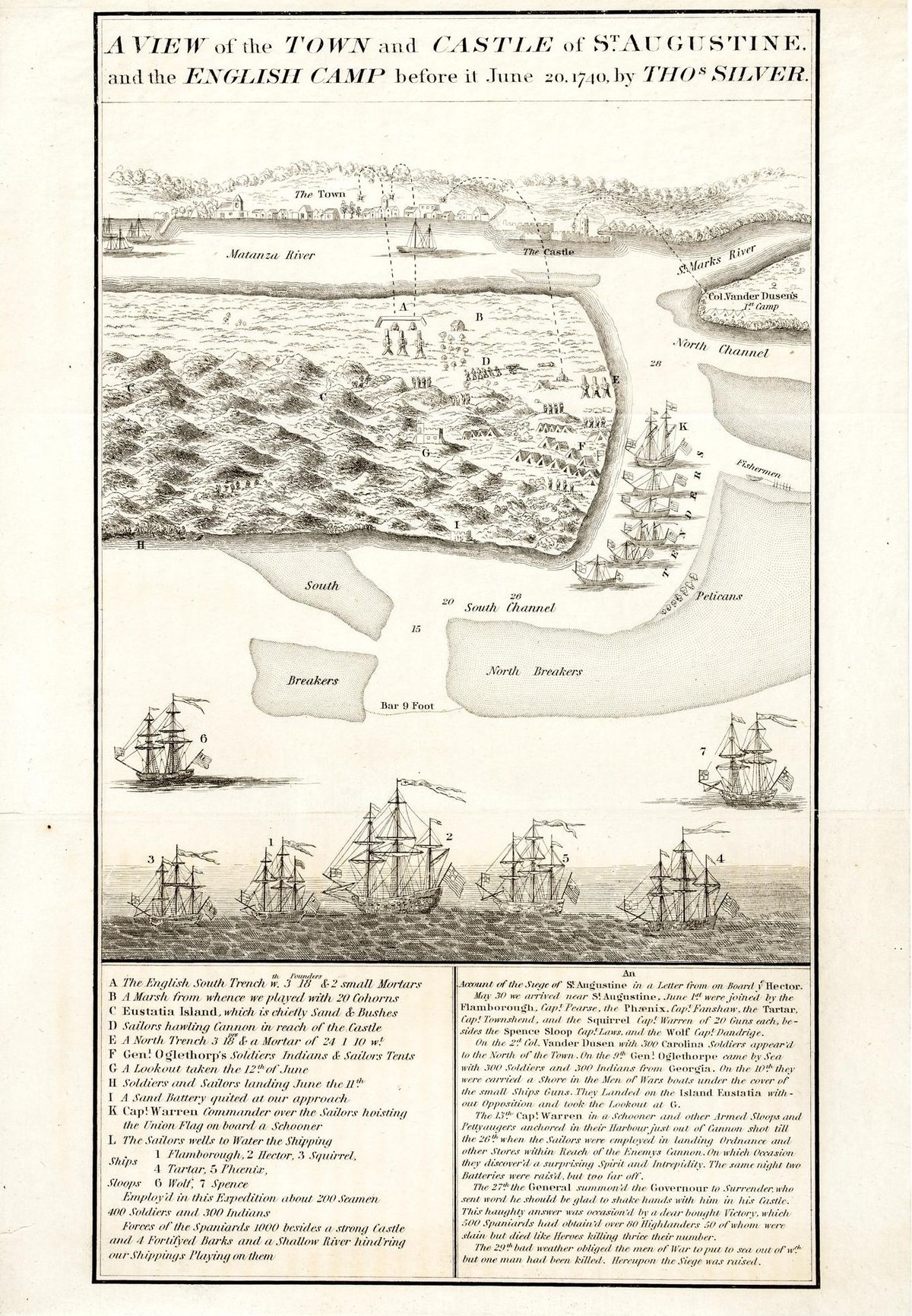
The campaign opened in May. Oglethorpe’s forces gathered at the mouth of the St. Johns River and marched inland, taking the small fort of Diego on the way and alarming the Spanish garrison, which now had time to prepare.(4)
Dismantling Mose
Before the main attack, Oglethorpe turned his attention to Fort Mose itself. The Spanish had evacuated it, and the general ordered its gate burned and three breaches cut in the walls — dismantling the outpost so it could not be turned against him, and, his critics later charged, so that it could not become a refuge for the enslaved people who fled to it from the British colonies.(5) The people of Mose withdrew into the city of St. Augustine and took shelter within the Castillo de San Marcos, the great coquina fortress that guarded the harbor.
The battle
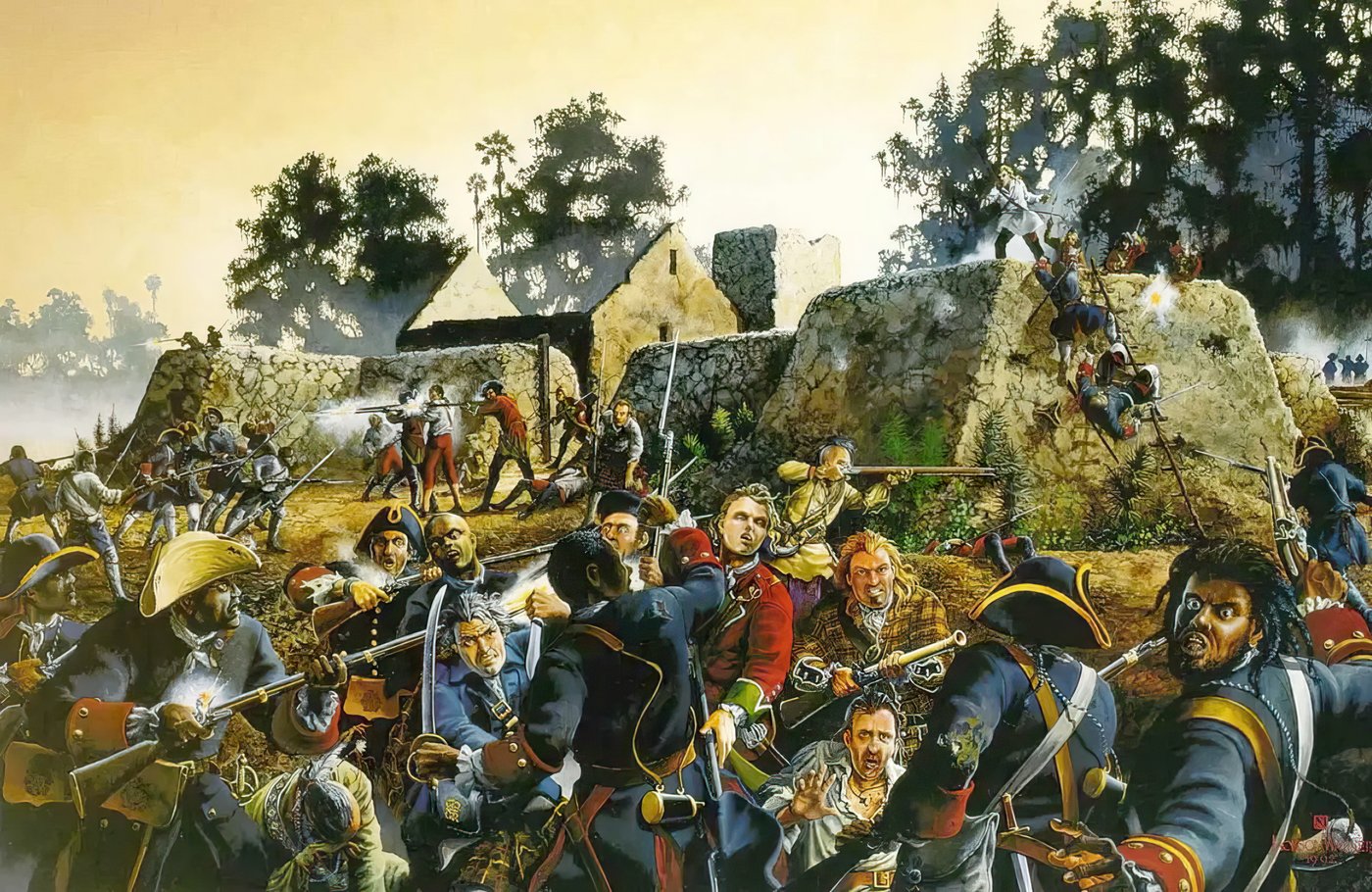
The decisive engagement of the campaign came not at the Castillo but at the dismantled fort. Oglethorpe had divided his force: the main body went to Anastasia Island, opposite the fortress, while a weak detachment of between ninety and a hundred white soldiers — Highlanders and others — with forty-two Indians and two officers was left on the mainland at Fort Mose “to alarm the Spaniards.” Its commander, the experienced South Carolina officer Colonel John Palmer, had warned that the party was too weak, but he accepted the command.(6)
On the night of the attack, the governor of St. Augustine, Manuel de Montiano, learned from his spies that little more than a hundred men were encamped at the old fort. He sent out of the city at midnight a force of about three hundred — dragoons, convicts, Indians, and the free Black militia of Mose, whose captain was Francisco Menéndez — under the command of Captain Antonio Salgado. Moving slowly, they lay in ambush near the British camp; when the Scots called the watchword at three in the morning, the Spaniards fell on them. In less than three-quarters of an hour the skirmish was over. At the point of the bayonet there surrendered a company of seventy-two Scots — chosen men who were Oglethorpe’s own bodyguards — with fifteen infantrymen and a sergeant, forty horse, and thirty-five Indians.(7)
The British lost their commander. Colonel Palmer was killed, and, as one witness deposed, even after he took his mortal wound he kept loading his piece and crying, “Whirra, boys, the day is our own; I have been in many battles and never lost one.”(8)
It was one of the few victories Spain won on the frontier, and it demoralized the combined British force. The British gave the engagement a name that stuck: Bloody Mose, or Fatal Mose.(9)
The date, and the sources
The exact date of the battle is a small puzzle, and it is worth pausing over. The two surviving accounts of the fight disagree. In his letter, the Spanish governor Montiano wrote that he sent out the attacking party at midnight on 25 June. The British account, published in 1742, places the engagement on 15 June. Modern accounts generally settle on 14 June 1740.(10)
Such disagreements are ordinary in the records of a frontier war, where news traveled slowly and each side wrote its own version. They are a reminder that a single “fact” — even the date of a battle — is rarely handed down ready-made, but has to be weighed across competing sources, each with its own vantage point and its own reasons for telling the story the way it does.
The siege fails
Around the battle, the siege itself ground to a halt. The British threw up batteries on Anastasia Island and on Point Quartell and bombarded the Castillo and the town, but the distance and the fortress’s thick coquina walls absorbed the fire with little damage. In the harbor, six Spanish half-galleys ran in and out and harried the besiegers; the British commanders agreed to attack them but never did.(11)
The end came from the sea. In early July the British commodore, Vincent Pearse, citing the approaching hurricane season, withdrew the fleet on 5 July — breaking the promise of a sustained blockade. Starved of naval support and plagued by disease and desertion, Oglethorpe ordered a hasty retreat, burning his provisions and abandoning his equipment. The expedition, the largest British assault on Spanish Florida, ended in a decisive Spanish victory.(12)
The cost
The victory came at a price. Fort Mose was gone, and for the next twelve years the people of Mose lived within the city of St. Augustine — working on government projects, serving as sailors and privateers, and foraging food for the garrison — until the Spanish rebuilt the settlement on the outskirts in 1752.(13)
Francisco Menéndez paid the heaviest cost of all. In 1741 he was captured by the British ship Revenge; a British admiralty court, acting on presumptions about his race rather than the evidence, ordered him sold into slavery. Whether he appealed successfully, was ransomed, or escaped is not known — but by 1759 he was once again in command at Mose.(14)
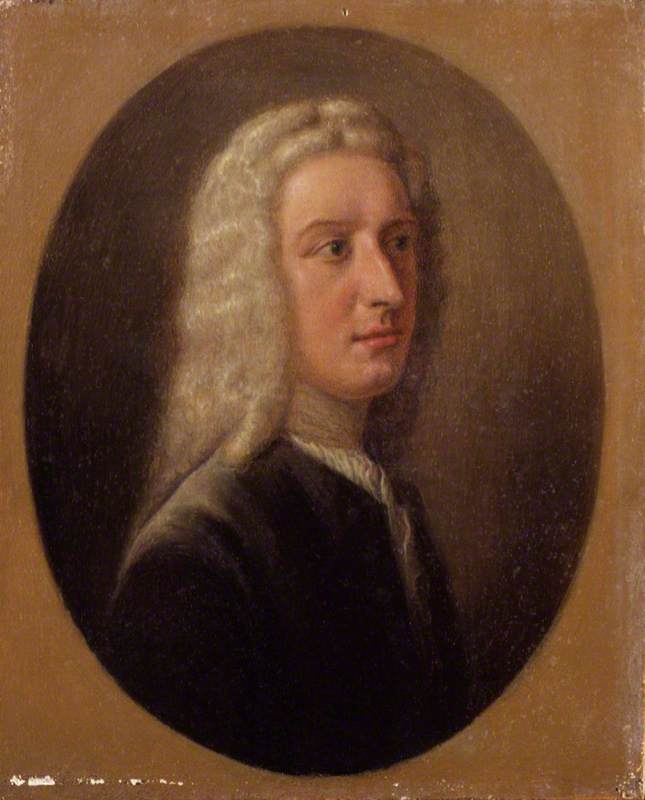
The failure also produced a bitter pamphlet war. Oglethorpe blamed South Carolina for its tardy support; the colony’s own report was suppressed, and a supporter, James Killpatrick, published An Impartial Account in 1742 to defend the Carolinians and lay the blame at Oglethorpe’s door.(15)
References
- 1. Verne E. Chatelain, The Defenses of Spanish Florida 1565–1763 (1941) (the War of Jenkins’ Ear and Oglethorpe’s orders). (return)
- 2. Chatelain, op. cit. (Antonio de Arredondo’s 1739 survey of the defenses). (return)
- 3. James Killpatrick, An Impartial Account of the Conduct of the Governor of Georgia (1742) (South Carolina’s troops and ten thousand pounds). (return)
- 4. Killpatrick, op. cit. (the march and the capture of Fort Diego). (return)
- 5. Killpatrick, op. cit. (the gate burned and breaches made); Florida Museum of Natural History education packet (1991) (the “mouse trap” concern). (return)
- 6. Killpatrick, op. cit. (Palmer’s detachment of under a hundred whites and forty-two Indians, and his warning). (return)
- 7. Manuel de Montiano, letter reporting the attack on Palmer’s detachment (1740); Letters of Montiano, Siege of St. Augustine. (return)
- 8. Killpatrick, op. cit. (the deposition on Palmer’s death). (return)
- 9. Florida Museum of Natural History education packet (1991); Jane Landers, “Gracia Real de Santa Teresa de Mose,” The American Historical Review 95, no. 1 (1990) (“Bloody Mose” / “Fatal Mose”). (return)
- 10. Montiano, letter (1740) (25 June); Killpatrick, op. cit. (1742) (15 June). (return)
- 11. Chatelain, op. cit.; Killpatrick, op. cit. (the batteries, the coquina walls, and the half-galleys). (return)
- 12. Killpatrick, op. cit. (Commodore Pearse’s withdrawal of 5 July and Oglethorpe’s retreat); Chatelain, op. cit.. (return)
- 13. Florida Museum of Natural History education packet (1991); Landers, op. cit. (the twelve years in the city; the rebuilding of 1752). (return)
- 14. Landers, op. cit. (Menéndez’s capture by the Revenge in 1741 and sale into slavery). (return)
- 15. Killpatrick, An Impartial Account (1742) (the pamphlet war over the expedition’s failure). (return)