
Life at the Fort
A town and a garrison
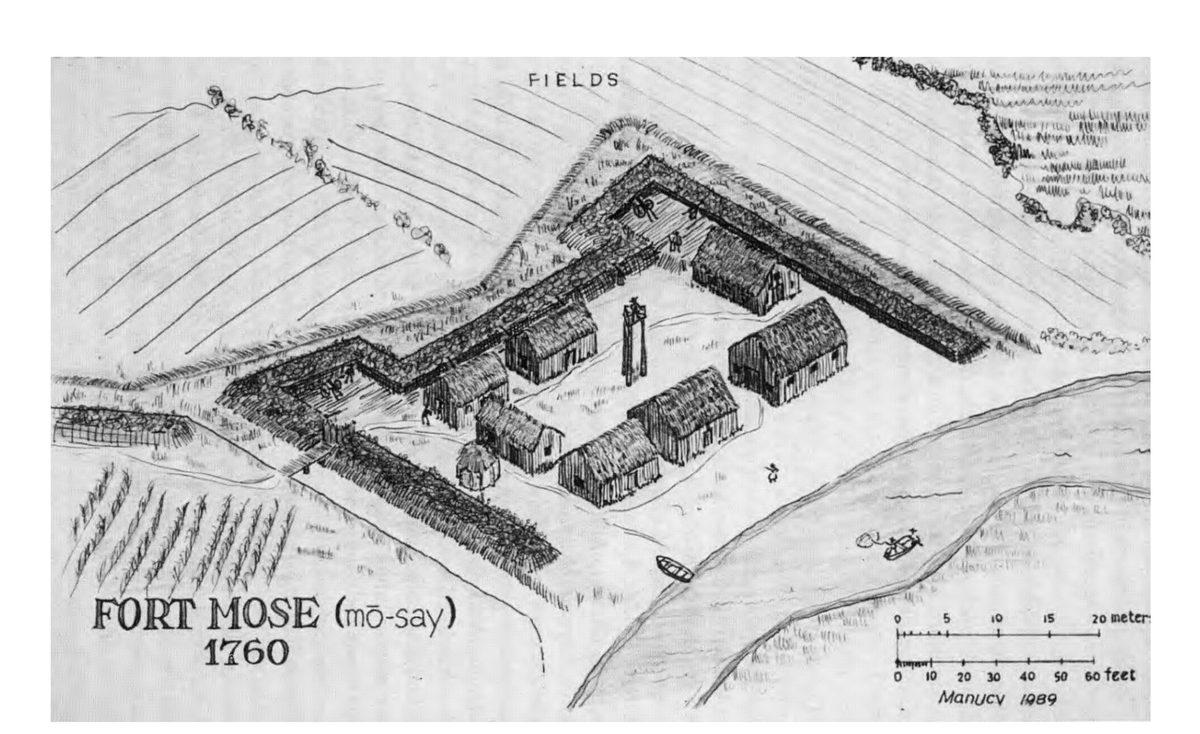
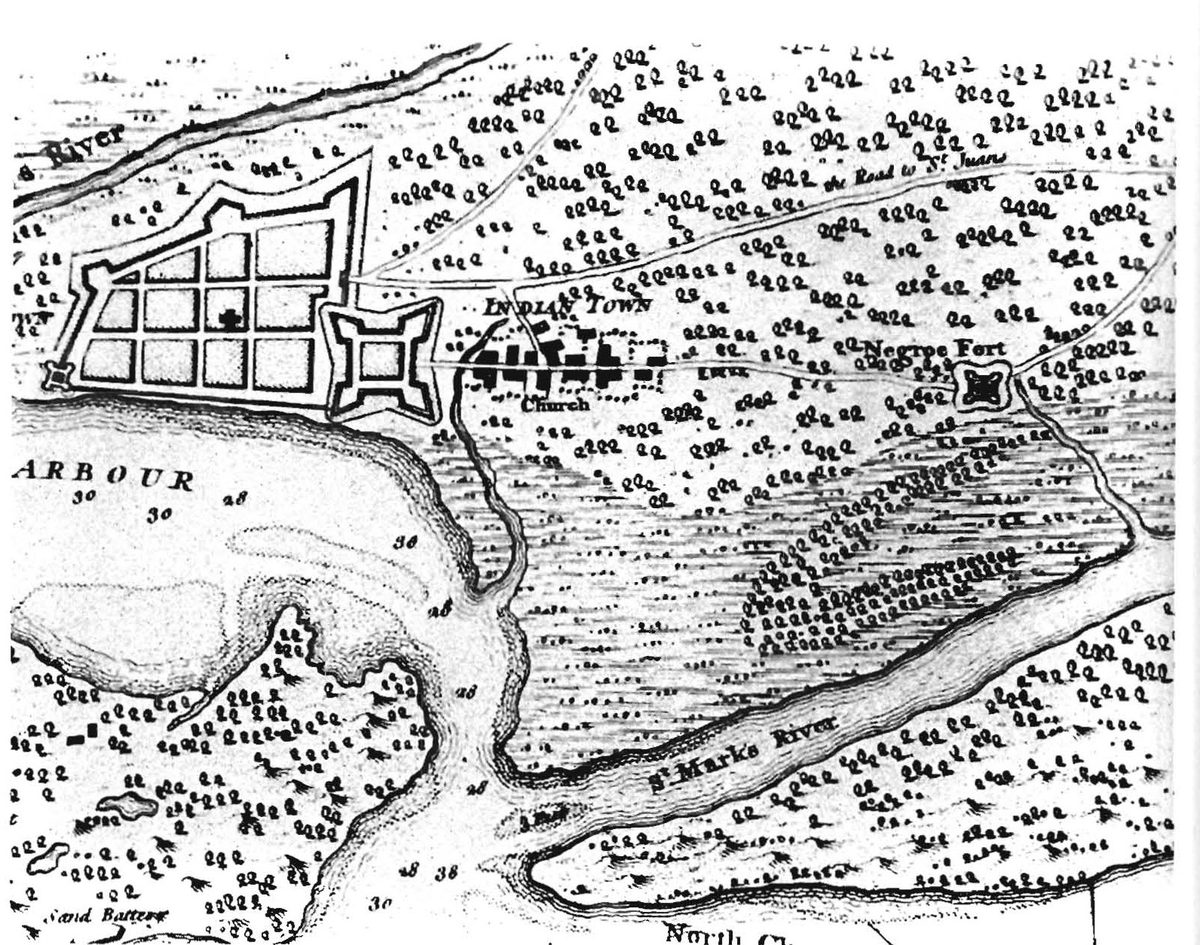
The residents of Mose lived in the village, farmed the fields around it, and served as the first line of defense for St. Augustine. Free Black men and women fished and hunted, worked as building contractors, rounded up the wild horses and cattle that ranged the frontier, and tracked escaped prisoners. When the mullet were not biting, they were given corn and beef from the government stores. The settlement was a working community, not a camp: its people had homes, families, and a stake in the land.
The militia
The free Black militia of Mose was the colony’s most effective force on the frontier. Because the Spanish garrison at St. Augustine was chronically short of men, the militia — organized as light cavalry for frontier reconnaissance and guerrilla warfare — was a critical asset. They had their own officers and patrolled independently, and could be combined with Spanish infantry for specific missions. Its captain was Francisco Menéndez, who commanded the force for more than forty years; the Spaniards regarded him as a sort of natural lord, and the governor referred to the people of Mose as his “subjects.”
The 1759 census
On February 11, 1759, the priest Fray Gines Sánchez took a census of the settlement. It recorded 67 individuals in 22 households: 37 adult men, 15 adult women, and 15 children. The average household held three people; six households included children, and only one included grandchildren. The census lists military ranks — Francisco Menéndez as Captain (age 55), Antonio Elígio as Lieutenant (45), and Francisco Escovedo as Second Lieutenant (45) — a snapshot of a small, structured, self-governing community at its height.
Sources: Jane Landers (1990), including the 1759 census taken by Fray Gines Sánchez; Fort Mosé: Earliest Free African-American Town in the United States (archaeological report).