
The Road to Freedom
The sanctuary policy, the road to 1738, and the founding of Mose
The promise of sanctuary
From the late 1680s, enslaved people began fleeing the British colonies of the Carolinas for Spanish Florida, drawn by the report that the Spanish in St. Augustine would grant them freedom if they converted to Catholicism. The first recorded group arrived in 1688 — eight men, two women, and a child — and asked to be baptized into the “True Faith.” Governor Diego de Quiroga refused to return them to their British owners; he housed them with Spanish families, instructed them in the Catholic faith, and employed them as paid laborers on the Castillo de San Marcos.(1)
In 1693 King Charles II of Spain made the policy official, granting freedom to the fugitives on the basis of their conversion. The decree set a precedent that linked spiritual conversion with legal emancipation — a sharp contrast to the English system of chattel slavery, in which an enslaved person was property with no such path to freedom.(2)
The road was not smooth
The sanctuary was not always honored. In 1729 Governor Antonio de Benavides re-enslaved a group of runaways, selling them at public auction on the argument that the 1693 edict applied only to the original fugitives and that he feared British retaliation. A royal edict of 1733 restated the offer of freedom but attached a condition the fugitives would not accept: four years of royal service before they would be free.(3)
The founding of Mose, 1738
The fugitives’ fortunes changed with the arrival of Governor Manuel de Montiano in 1737. Led by their captain, Francisco Menéndez — a Mandinga man who had escaped from South Carolina and fought in the Yamasee War — and supported by a petition from the Yamasse cacique Jorge attesting to their loyalty and their bravery in frontier service, they sought complete liberty. On March 15, 1738, Montiano granted it. The freedmen vowed to be “the most cruel enemies of the English,” and the governor gave them a town of their own, to stand as a strategic outpost on the northern edge of the province.(4)
A name and a place
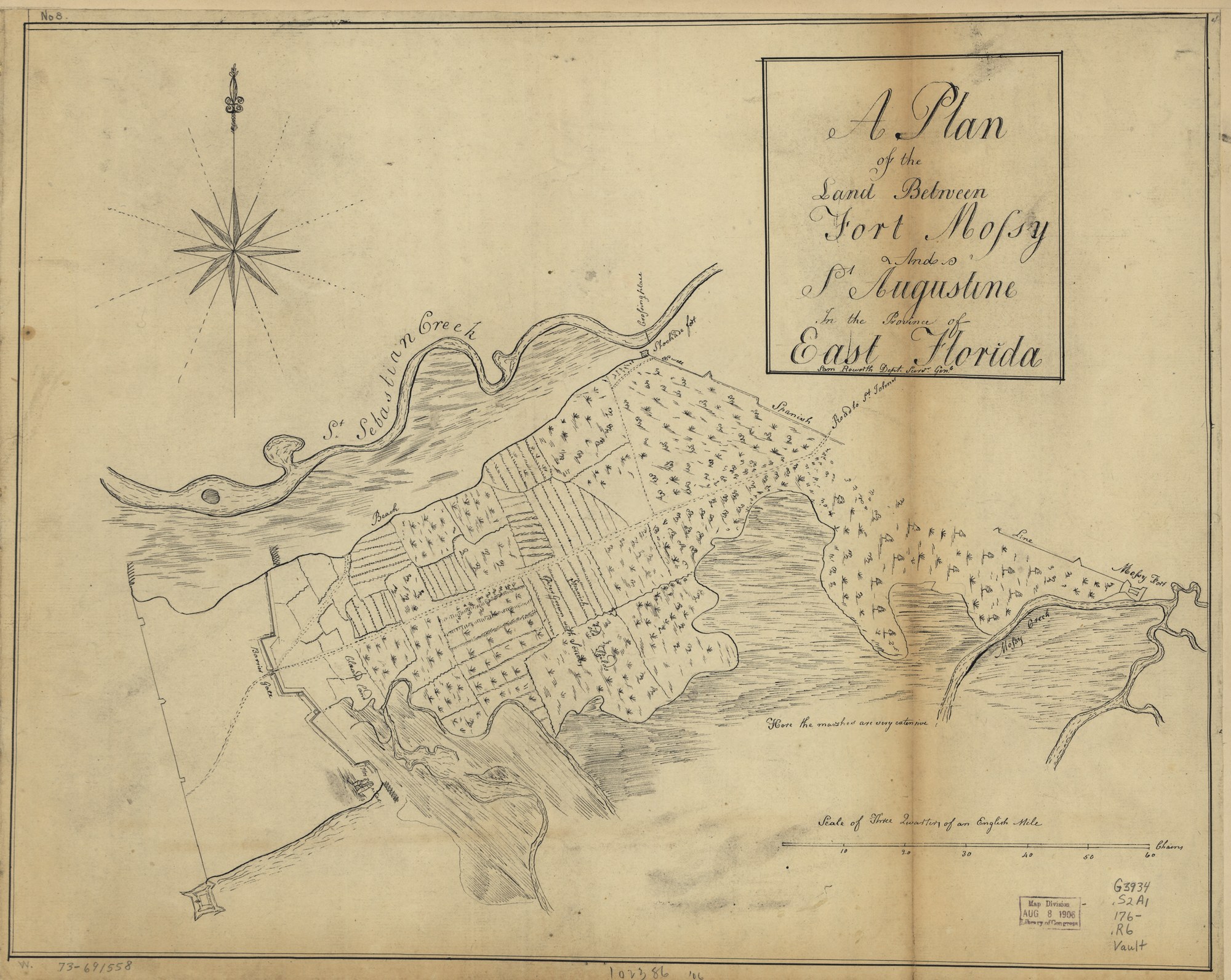
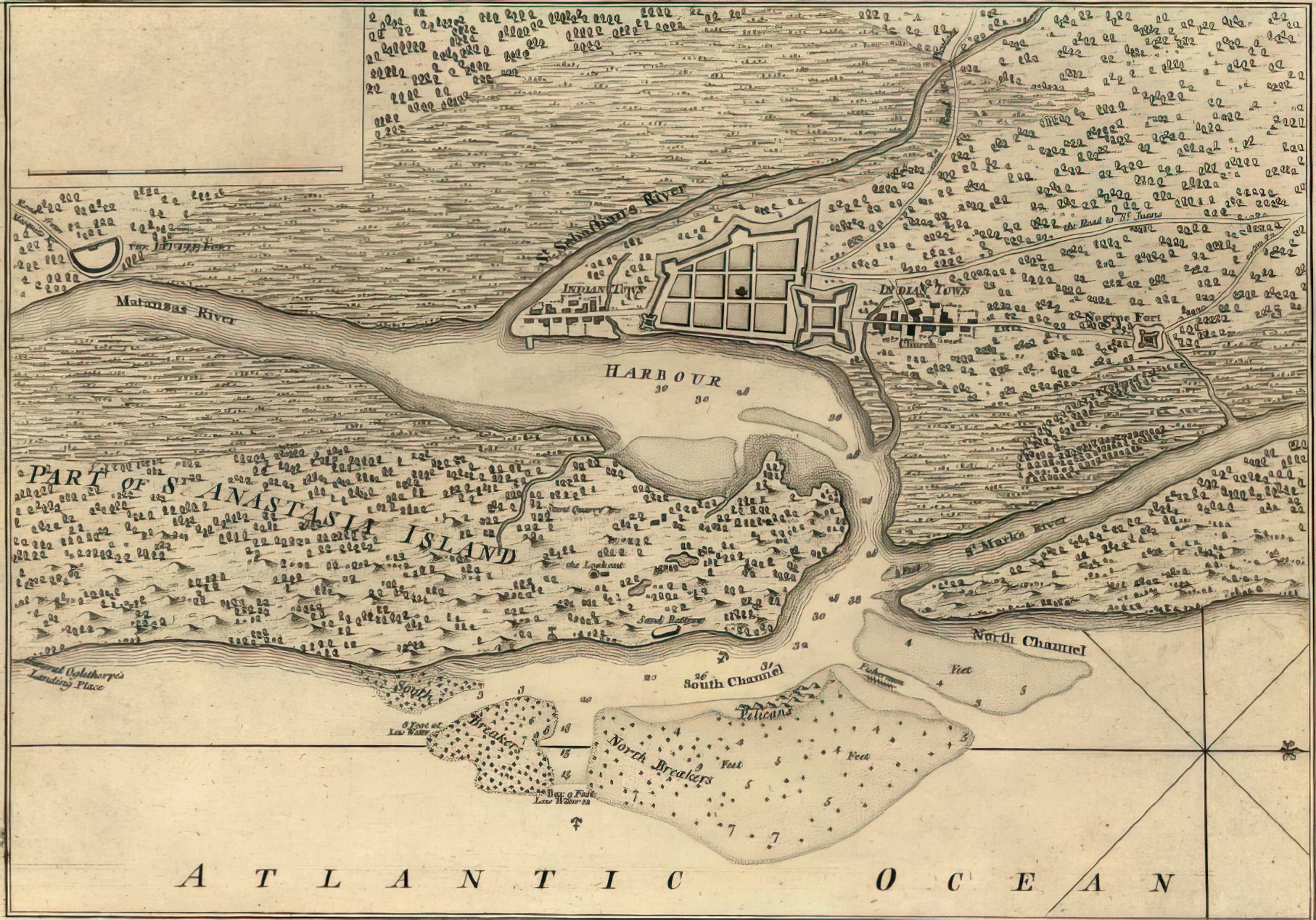
The settlement was chartered as El Pueblo de Gracia Real de Santa Teresa de Mose — the town of the “Royal Grace of Saint Teresa of Mose.” It stood two miles north of St. Augustine, at the head of Mosa Creek (a tributary of the North River), on the line the Spanish were building to defend the city against attack from the north. The ground was chosen for its value: it lay directly in the path of the road between St. Augustine and the mouth of the St. Johns River, and it commanded the salt marsh that any invading army would have to cross.(5)
A town and a garrison
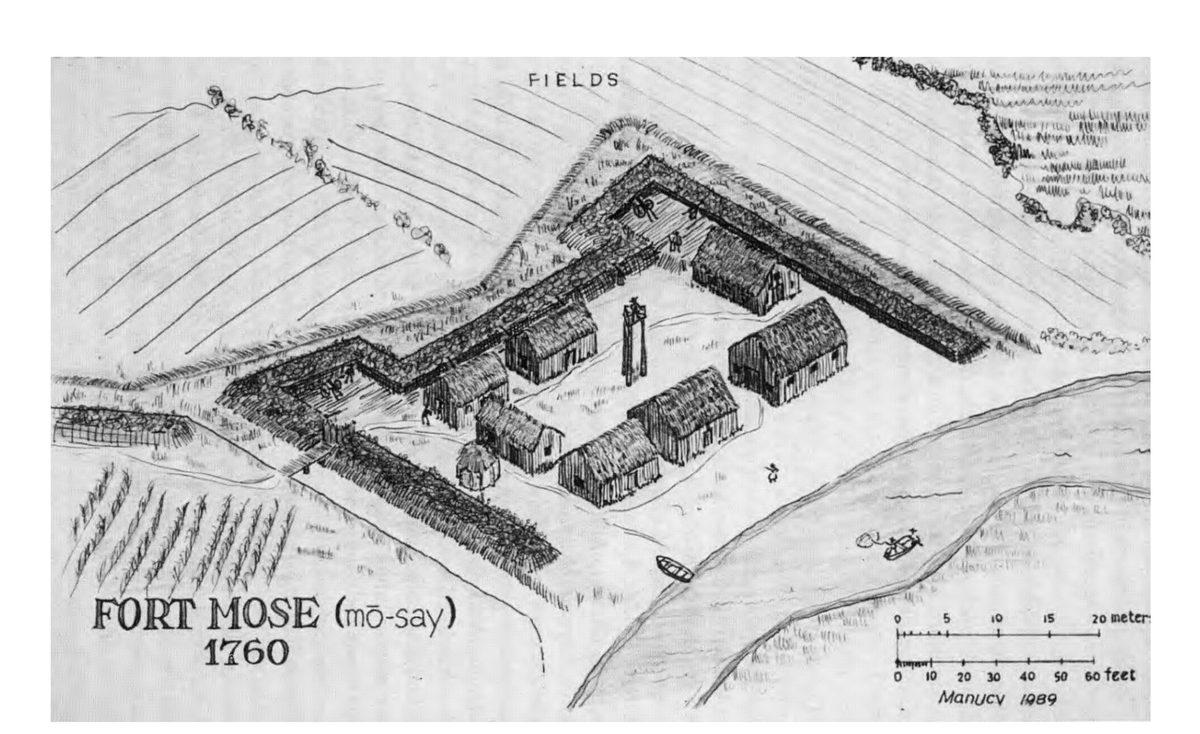
Mose was at once a town and a garrison. The residents were organized into a military company with its own officers, raised to garrison a fort armed with a battery of four guns; the fort itself was small — a stockade of earth, logs, and stone on the edge of the marsh. A Franciscan friar was posted to instruct the community in the Catholic faith, and the people farmed the fields around the fort. Some of the Yemassee Indians, who had taken refuge with the Spanish after their rebellion against the English in 1715, lived near the settlement, and the free Black and Indian communities stood together against the British to the north.(7)
The fort’s armament was modest but real. An inventory taken in 1759 recorded two iron cannons, four swivel guns, and twenty-four muskets, with their shot, powder, and cartridges — enough to make the outpost a genuine thorn in the side of any force coming down the north road.(8)
Word of the free town spread north. In November 1738, twenty-three more fugitives arrived from the Carolinas — among them the runaway slaves of the English merchant Caleb Davis, whose claims for their return the Spanish ignored. Mose was becoming what the sanctuary had always promised: a place where an enslaved person could become a free one.(9)
Why the Spanish did it
The Spanish slave code, rooted in the Siete Partidas and Roman law, held that slavery was contrary to natural law and gave even enslaved people rights the English colonies denied: the ability to own property, to purchase their freedom, to keep their families together, and to appeal to the courts. Freedom for service to the Crown was a recognized path. For the Spanish the settlement was also pragmatic: a body of free Black soldiers made a strong parapet against British invasion, and a free town on the border was a standing blow to the British slave economy to the north.(10)
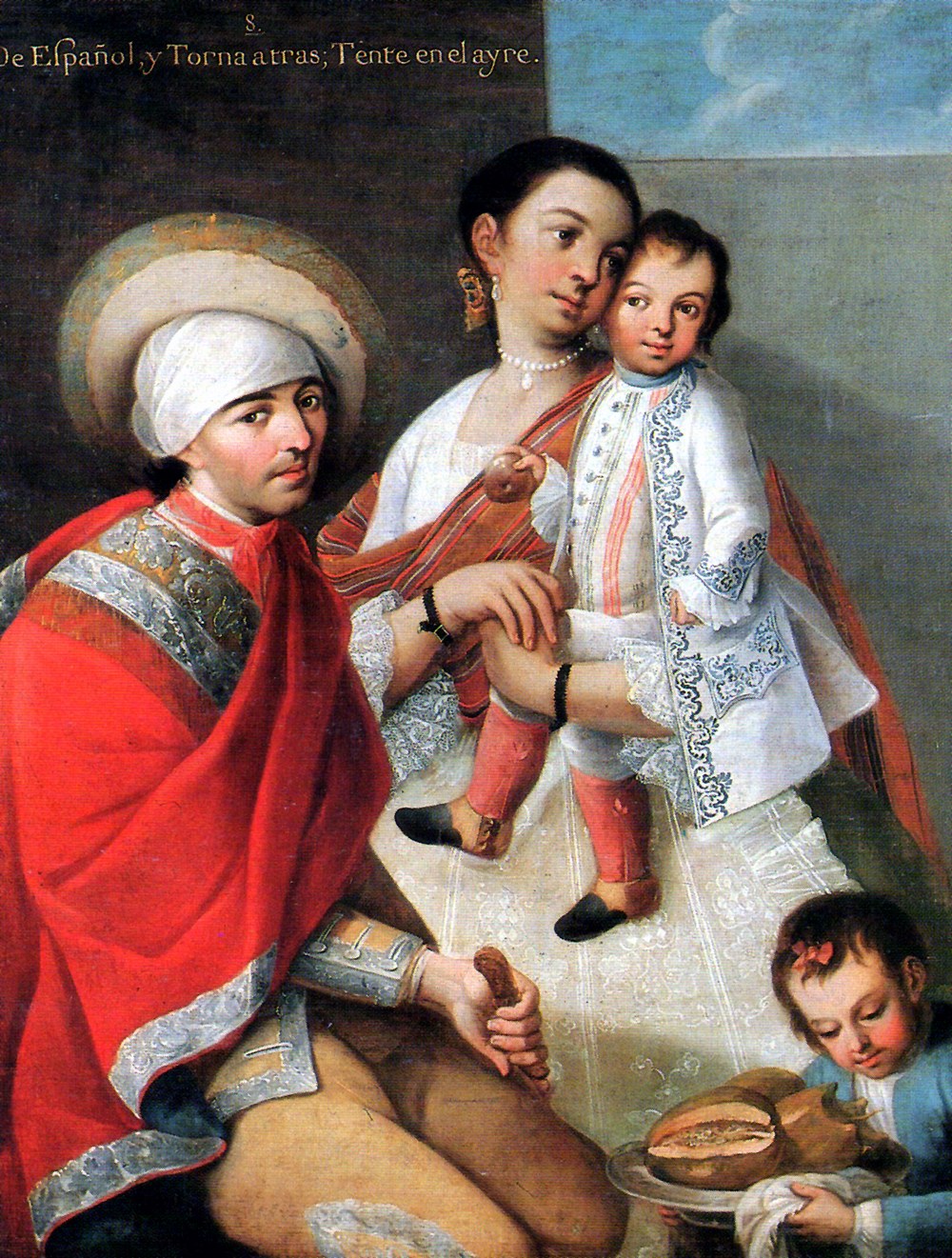
The result was a society unlike anything in the British colonies — a free Black town, self-governing and armed, where people of African, Spanish, and Indian descent lived, farmed, and served the Crown side by side.(11)
References
- 1. Jane Landers, “Gracia Real de Santa Teresa de Mose: A Free Black Town in Spanish Colonial Florida,” The American Historical Review 95, no. 1 (1990). (return)
- 2. Florida Museum of Natural History, Fort Mose: Colonial America’s Black Fortress of Freedom (education packet, Betty Dunkel Camp, 1991; updated 2023). (return)
- 3. Landers, op. cit. (return)
- 4. Landers, op. cit.; Florida Museum of Natural History education packet. (return)
- 5. Verne E. Chatelain, The Defenses of Spanish Florida 1565–1763 (1941). (return)
- 6. “A plan of the land between Fort Mossy and St. Augustine in the province of East Florida” (1760), Library of Congress, Map Division; William Roberts, An Account of the First Discovery and Natural History of Florida (1763; maps by T. Jefferys); Tomás López, Plano de la ciudad y puerto de San Agustin de la Florida (1783). (return)
- 7. Chatelain, op. cit., citing Siebert on the military company and the battery of four guns; Montiano’s letter to the King, September 25, 1740 (the Franciscan friar). (return)
- 8. Inventory of artillery at Fort Mose, reported by Captain Manuel de Barros, April 20, 1759; report of Juan Joseph de Solána, 1759. (return)
- 9. Chatelain, op. cit. (the fugitives of November 1738, including the slaves of Caleb Davis). (return)
- 10. Landers, op. cit.; Florida Museum of Natural History education packet (the Spanish slave code and the sanctuary policy). (return)
- 11. Florida Museum of Natural History education packet (the multi-ethnic society of St. Augustine and Fort Mose); casta painting by Miguel Cabrera, public domain. (return)